
Articles
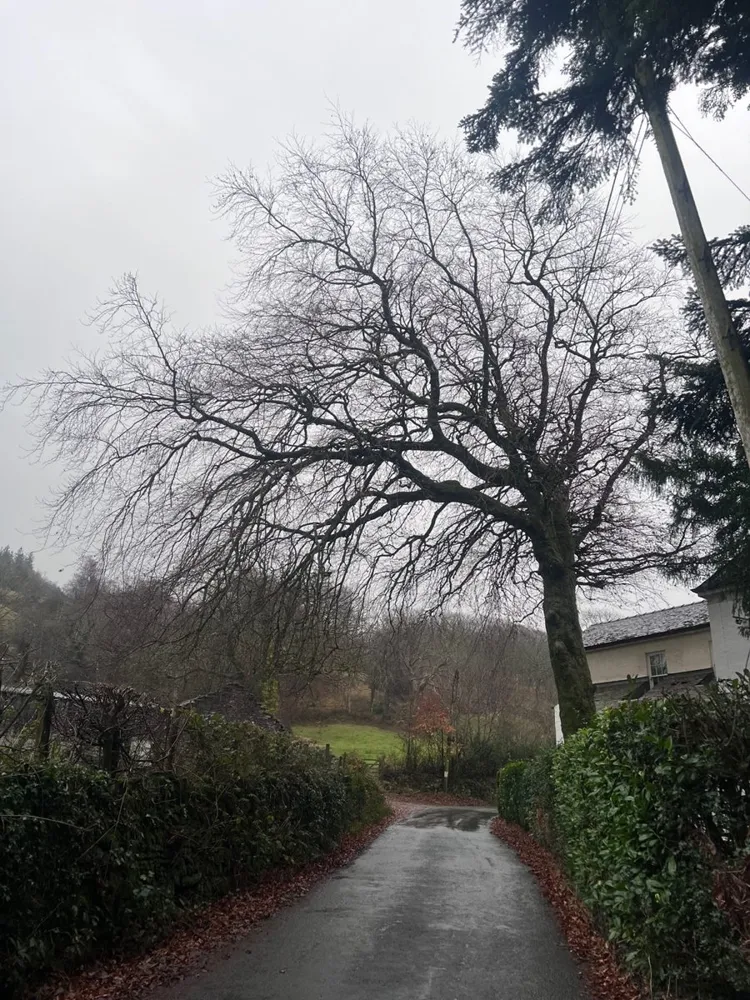
A copper beech beside a road.
A fine tree with a healthy crown, and a base that was failing.
Last summer I drove past this copper beech in full leaf and thought what a beautiful tree it was. Not long after, I was asked to survey the site, which is a small woodland beside a road in Coniston, in the Lake District National Park. This is what I found.
What I found
The crown was asymmetrical. It had grown out further towards the north and east, with hardly any growth on the south and west sides, so the tree was already under torsion from the wind.
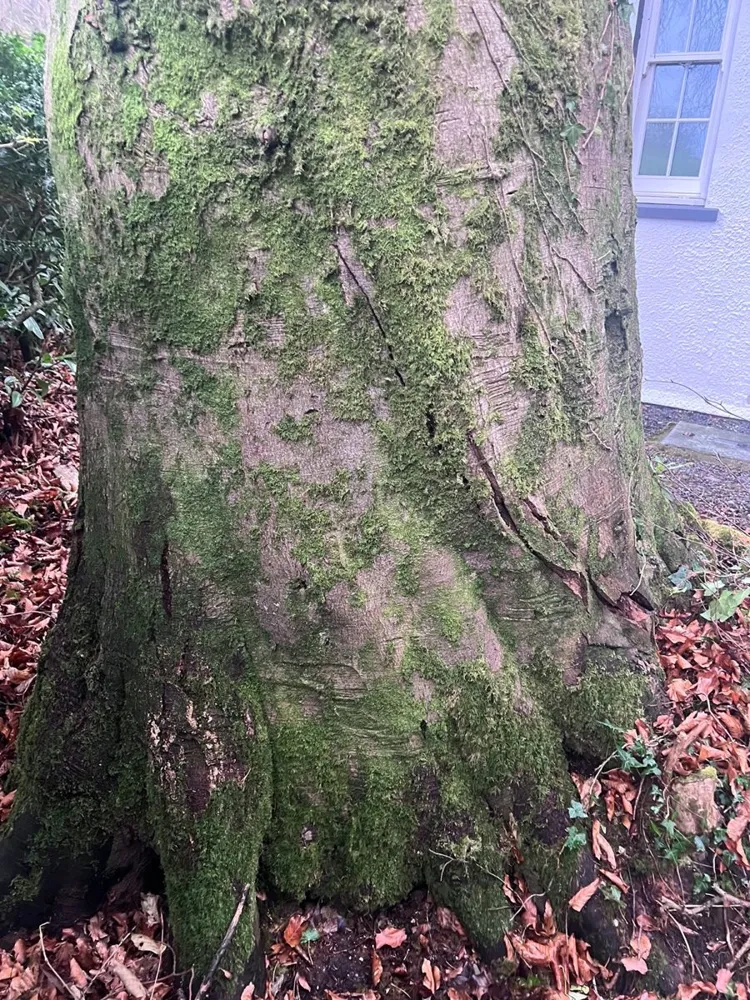
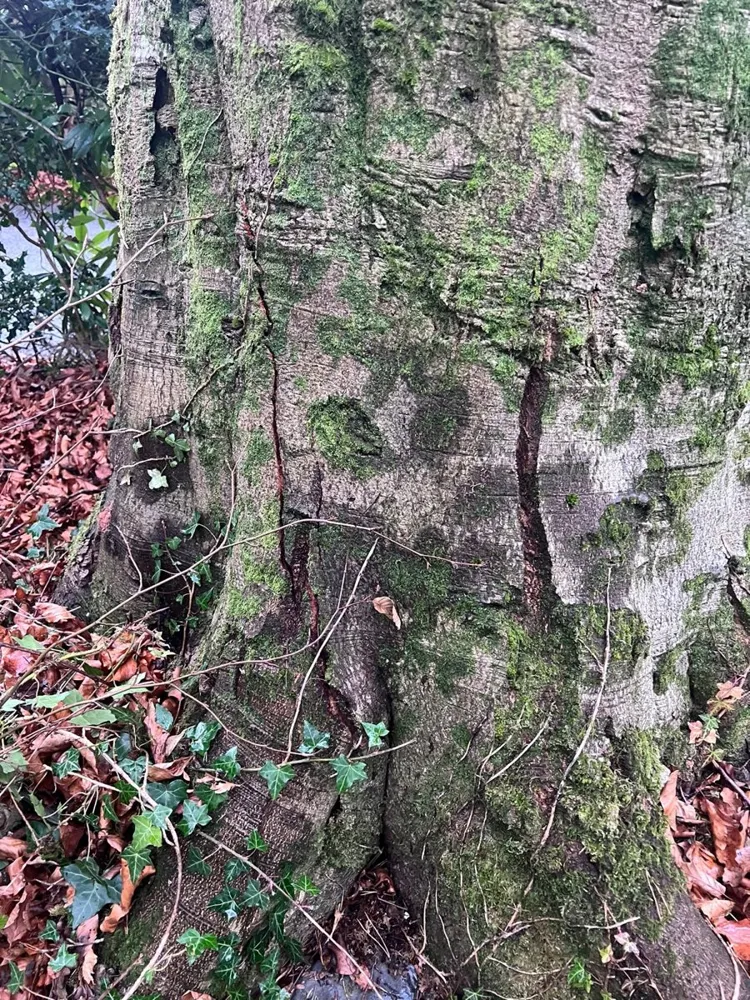
At the base there were two cracks on the west side, which suggested that wind from the north had cracked the base. The first crack was weathered, so it had been there for some time. Behind it was a fresh crack, showing pale inner bark with no weathering at all.
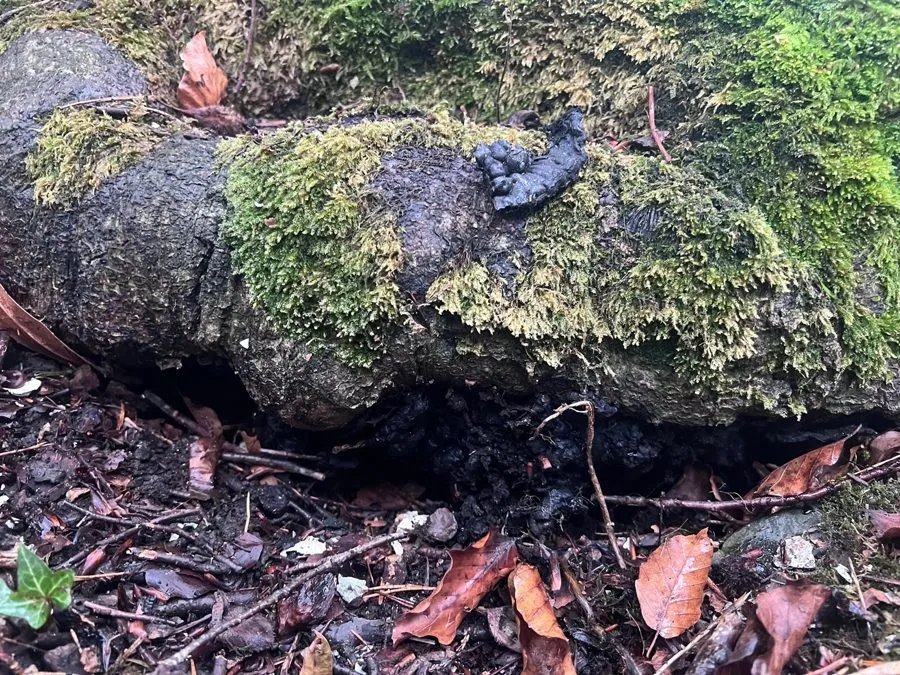
There was also brittle cinder fungus (Kretzschmaria deusta) on the buttress of one of the tension roots on the south side of the tree. It can cause extensive decay and is commonly linked to tree failure.
From where the first crack sits, it is likely the tree was cracked during Storm Arwen, when the wind blew heavily from the north. A further crack has developed since, and the tree has then been infected by the fungus. With the further cracking, the fungus, the lopsided crown and all that weight growing out over the road, I gave this tree a high probability of failure.
What I recommended
Cracks at the base of a beech this size are very unusual, and I rarely find them. Given where the tree stands, I recommended either a significant crown reduction to reduce the wind loading, or removal of the tree. It has been protected by a Tree Preservation Order made by the Lake District National Park Authority many years ago, so the work needs their consent or, where a tree is dangerous, notice to them first.
What to take from it
A healthy-looking tree is not always a sound one. A beautiful crown can sit on a failing base, and the signs are low down where they are easy to miss.
Related: Mature ash fails due to butt rot · A beech blows over in stormy weather · Tree surveys: why bother? · Consultancy
Tell us about the trees.
Call or email with the site and the question. We will tell you what is needed and what it will cost.