
Articles
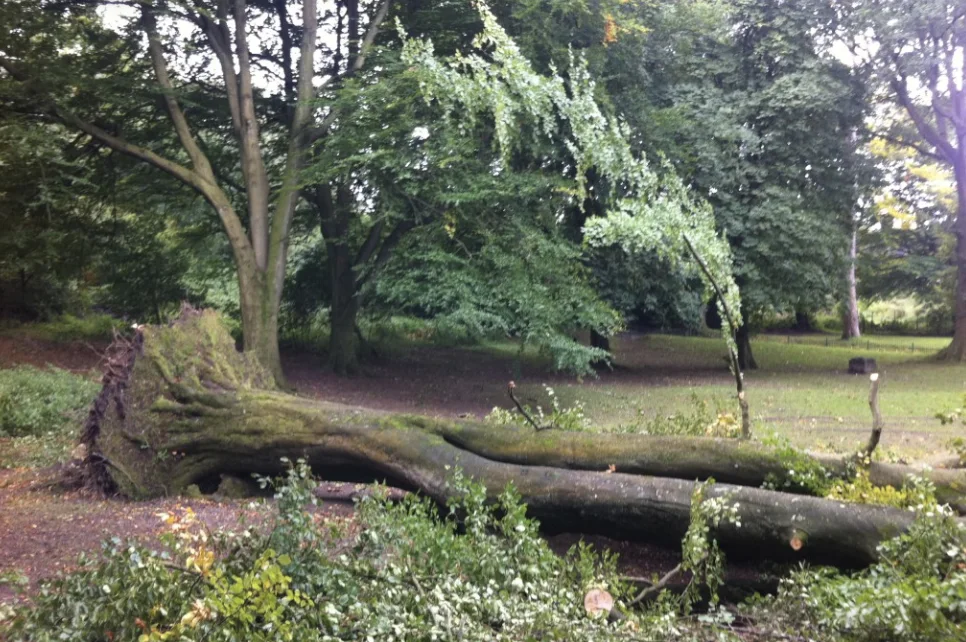
A beech blows over in stormy weather.
A tall beech with a full crown and no dieback came down in wind. The cause was in its roots.
During a windy spell in the Lake District, a large mature beech over 25 metres tall blew over. Before it fell, it had a full crown with no dieback, which, ironically, made it perfect for the wind to catch.
What the roots showed
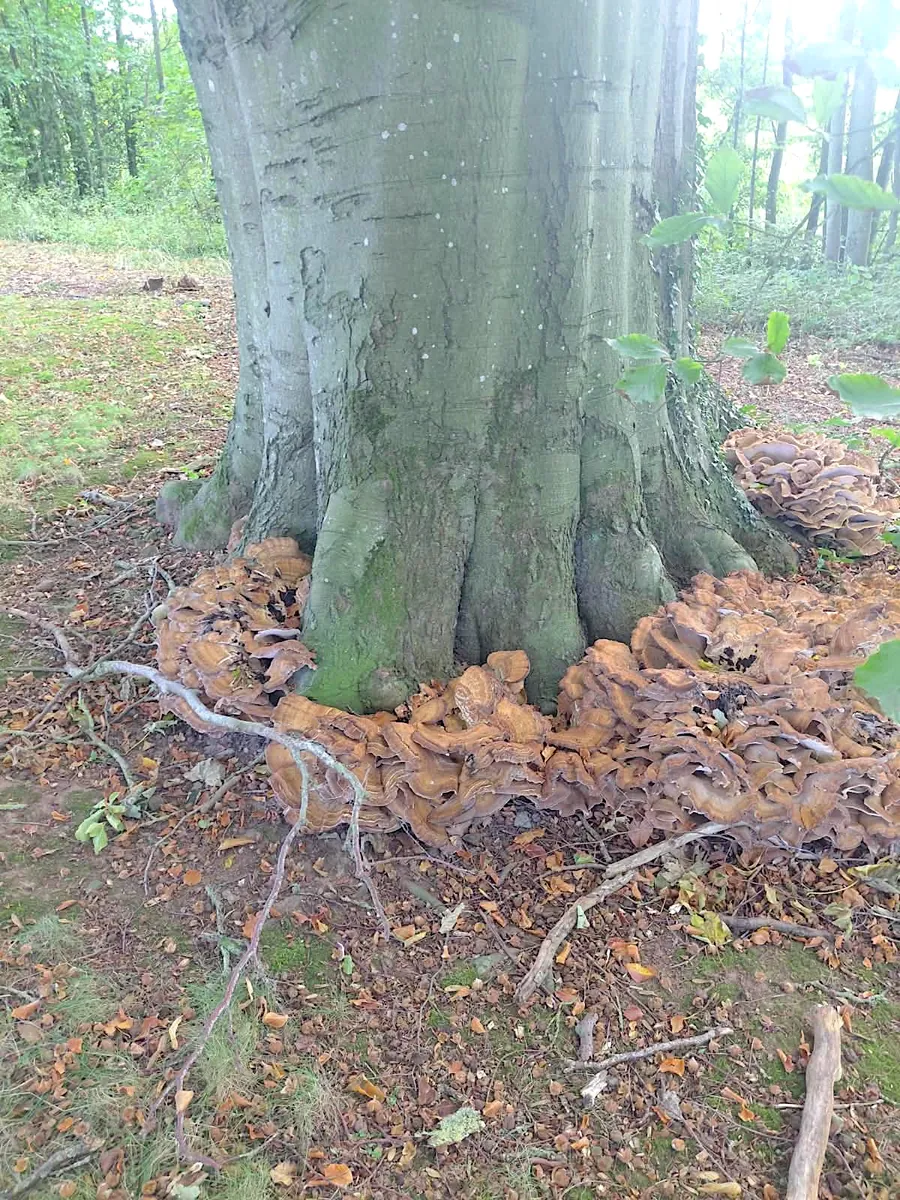
The root plate, the mass of roots lifted out of the ground, showed that some of the larger structural roots were extensively decayed. No fruiting bodies of the decay fungus were visible when I inspected it, but the pattern pointed to giant polypore (Meripilus giganteus).
What do bracket fungi mean for a beech?
Earlier studies suggested that once fruiting bodies appear at the base of a tree, it will inevitably blow over, because the fungus has been established in the roots long before it fruits. The fungus has repeatedly been recorded decaying the larger structural roots.
More recent research has found that some trees carry the infection for years without falling, and die standing up instead. So felling is no longer automatic when giant polypore appears. But a tree showing it needs careful investigation, because the risk of failure is high.
What to take from it
If you have a large beech near a path, road or building, look around its base in late summer and autumn. If you see bracket-shaped fungus on the roots or around the buttress, call a consultant to look at it before the next windy spell, not after.
Related: Mature ash fails due to butt rot · Consultancy
Tell us about the trees.
Call or email with the site and the question. We will tell you what is needed and what it will cost.