Articles
Tree surveys: why bother?
Most trees need nothing from us. A survey tells you which ones do, and which ones are fine to leave alone.
Trees are part of our towns and countryside, and most of us give them little thought until one drops a branch, blocks a view or comes down in a gale. Yet they are remarkable structures.
Trees look after themselves, up to a point
A tree is a self-optimising structure. It spreads the forces of gravity and wind through its stem, branches and roots, putting wood where it is needed, so that it stays upright. That has been refined over millions of years. It happens slowly, too slowly to watch, which is how a mighty oak grows from a small acorn.
What goes wrong
- Decay breaks down the structural wood, in stems, roots and branches, and weakens the tree.
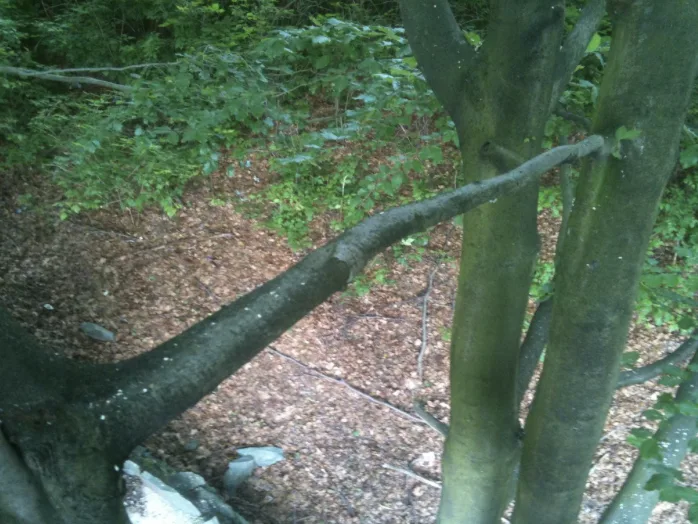
- Splits and poor branch unions can weaken a tree a good deal.
- Building and utility work can leave trees unsafe by damaging their roots. The current British Standard for trees and construction, BS 5837:2012, has made this less common.
Hazards are often subtle. Judging whether a tree is likely to hurt someone or damage property takes a trained eye and years of experience of different species, their wood and their weaknesses. That is not something you can pick up from books alone.
What the law expects of tree owners
- The Highways Act 1980 requires trees to be cut back where they encroach on the highway, and dangerous trees to be removed.
- The Occupiers' Liability Acts 1957 and 1984 require landowners to take reasonable care that visitors are safe, and that includes the trees.
- Health and safety law puts a duty of care on landowners to do what is reasonably practicable, including having trees inspected regularly by a competent person.
How a survey helps
A survey maps where the risk is. Areas used heavily next to large trees, such as buildings, car parks, busy roads, footpaths and power lines, are higher risk. Trees in quiet areas are low risk, because people are unlikely to be nearby if one fails.
The trees in higher risk places can then be assessed one by one, to decide whether pruning or felling is needed. Putting the work in order of priority means money is spent where it matters, and it supports long-term planning. Above all, it lets you show that you have met your duty of care, and gives you peace of mind about the trees you are responsible for.
Related: Consultancy · Mature ash fails due to butt rot
Tell us about the trees.
Call or email with the site and the question. We will tell you what is needed and what it will cost.