Articles
BS 5837 tree surveys for planning.
What a BS 5837 tree survey is, what it contains, and why to have it done before the layout is drawn.
If you are applying for planning permission and there are trees on or next to the site, the council will usually ask for a tree survey that follows BS 5837. It is the British Standard for how trees and building work should fit together, and the survey is the first step in showing that they can.
What BS 5837 is for
The standard is called Trees in relation to design, demolition and construction. Its aim is to keep the trees that matter, and to protect them properly while the building work goes on. It is used by planning officers and tree officers across the country, so a report that follows it is one they know how to read.
What the survey records
Each tree is measured, plotted and given a retention category:
- A: high quality, worth designing around.
- B: moderate quality.
- C: low quality, not normally a constraint.
- U: in such poor condition that it should not be kept.
Each tree also gets a Root Protection Area, which is the ground around it that has to be left undisturbed. It is worked out from the diameter of the stem, and it is often much larger than people expect.
The documents
For a straightforward site the survey is usually followed by:
- a tree constraints plan, showing the trees and their root protection areas on the site;
- an arboricultural impact assessment, saying what the proposed layout does to the trees;
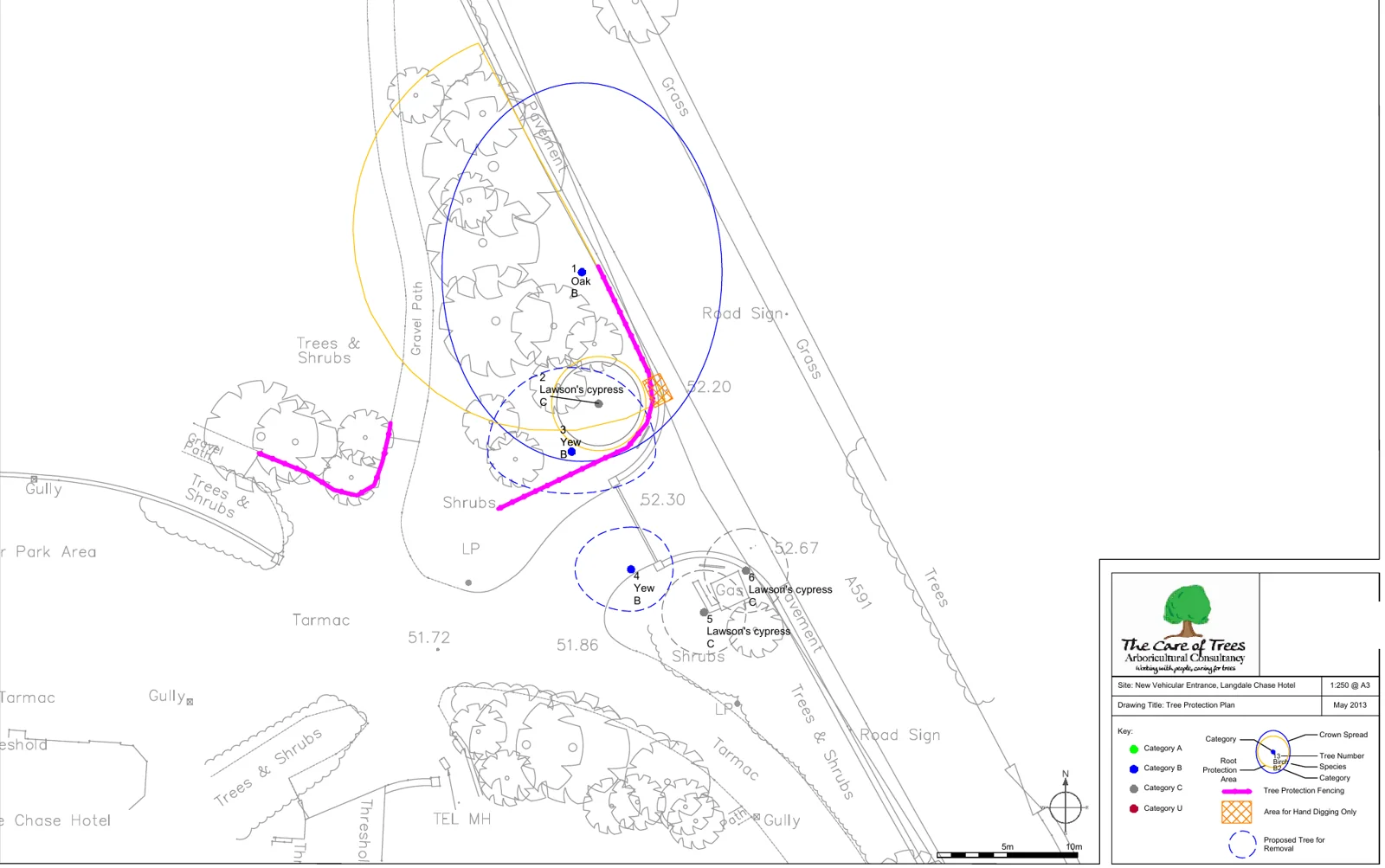
- an arboricultural method statement and a tree protection plan, saying how the trees that stay will be protected during the work.
Not every application needs all of these. A small extension may only need the constraints plan, and the council can tell you what it will accept.
Do it early
The best time to have the survey done is before the layout is drawn. If the trees are known first, the design can work around them, and there is much less chance of a refusal, or of a costly redesign after the council raises concerns. Many sites here are also in the Lake District National Park or a conservation area, or have trees under a Tree Preservation Order, which adds to what the council will expect to see.
If you are planning a project near trees, get in touch with the address and a few details, and we will tell you what the council is likely to need.
Related: How QTRA measures tree risk · Tree surveys: why bother? · Consultancy
Tell us about the trees.
Call or email with the site and the question. We will tell you what is needed and what it will cost.