Consultancy
Veteran trees: surveys and management.
Old trees are worth more than their size. Looked after well, they can stay standing, safe and full of life for a very long time.
What makes a tree a veteran
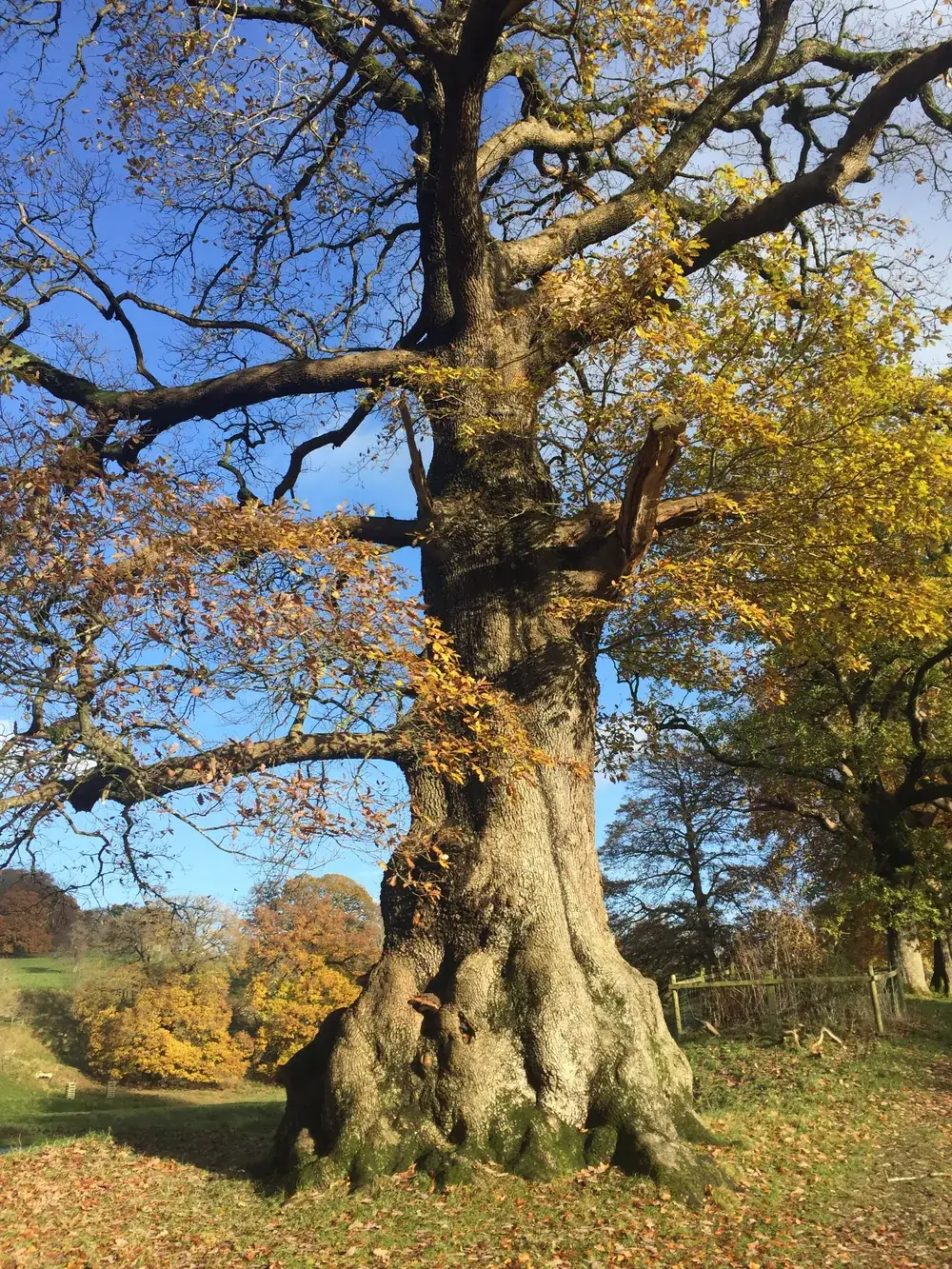
A veteran tree is old for its species, and often has the features that come with age: hollow trunks, cavities and rot holes, broken limbs, dead wood in the crown and a gnarled shape. These are not simply defects. They are habitat for fungi, insects, bats and birds, and a tree with them can be far more valuable than a younger, tidier one.
What a survey covers
- Where each tree is, how big it is and how it is growing
- Its condition, including decay, cavities, cracks, lean and the state of the roots, and fungi such as Ganoderma on the base of old oaks and beeches
- The features that give it value for wildlife and the landscape
- Who and what is within reach if part of it fails, such as paths, roads, buildings and play areas
Managing an old tree
The aim is to keep the tree, not to tidy it up. Where there is a risk to people, the answer is often to change how the area is used, or to protect the tree's root area from compaction and damage, rather than to cut it down. Where work to the tree is needed, it is kept to the minimum, and planned so the tree can cope with it. We can also advise on planting younger trees nearby, so there is a succession of future veterans.
Many old trees are also covered by a Tree Preservation Order or stand in a conservation area. If so, we prepare the application or notification to the council.
Related: Consultancy · Giant redwood and honey fungus
Tell us about the trees.
Call or email with the site and the question. We will tell you what is needed and what it will cost.